Intra-Oral Camera
Washington, DC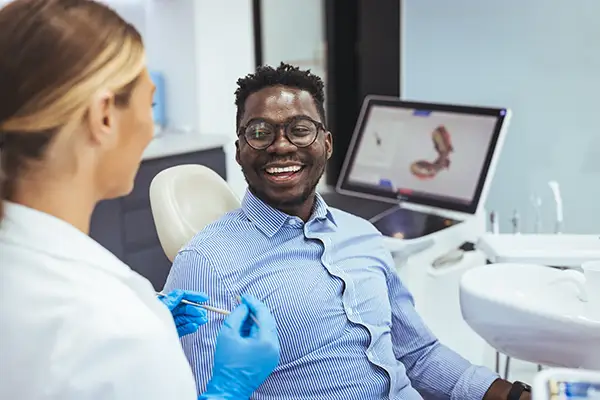
Dental anxiety is a real and significant barrier to care for an enormous number of people. Some individuals delay treatment for years at a time, finally returning to the dentist only when a problem has become too painful or too obvious to ignore any longer. Others attend appointments regularly but spend the entire visit in a state of stress that makes the experience unpleasant and exhausting. Understanding the sources of dental anxiety and finding ways to reduce it is an important goal for Capital Dental Center. Our practice is serious about patient-centered care, and intraoral cameras play a meaningful supporting role in addressing one of the most common but least-discussed contributors to that anxiety.
The Many Forms Dental Anxiety Takes
Dental anxiety does not have a single cause or a uniform presentation. For some patients, it traces directly back to a painful or frightening experience in the past, particularly one that occurred during childhood when the setting was unfamiliar and the patient had little understanding of or control over what was happening. For others, anxiety centers on specific sensory triggers, including the sound of the drill, the sensation of vibration, or the smell of the office. For a significant subset of anxious dental patients, however, uncertainty is the primary driver. They do not know exactly what the dentist is finding, what treatment is going to be recommended, or what will be done to them during the visit. That ambient uncertainty generates significant anxiety even before any instrument is used.
Information as a Meaningful Antidote to Fear
For patients whose anxiety centers primarily on uncertainty, intraoral cameras offer something concrete and genuinely useful: information. Seeing real, high-resolution images of what is actually happening inside their own mouths gives these patients a degree of control and transparency that changes the nature of the clinical encounter. The problem that was abstract and unknown becomes visible and specific. The treatment recommendation that felt arbitrary and unexplained becomes clearly connected to a visible clinical finding. For patients in the uncertainty-driven anxiety category, this shift from the unknown to the known produces measurable, sometimes dramatic reductions in how stressful the appointment feels.
Making the Exam Feel Collaborative
Dental anxiety is frequently connected to a sense of powerlessness, the feeling that something is being decided about your body and done to you without your full understanding or meaningful participation. Intraoral cameras shift the dynamic of the dental exam from unilateral to collaborative. The dentist is no longer the sole keeper of knowledge about what is in the patient's mouth. Both people in the room are looking at the same images and discussing the same findings. The patient can ask questions, request clarification, and contribute to the conversation about their own care. This collaborative quality does not change the clinical reality, but it fundamentally changes the patient's experience of that reality.
Reducing the Duration of Instrument Contact
For patients who are particularly sensitive to the physical sensation of dental instruments, intraoral cameras offer a practical advantage by reducing the extent to which direct instrument contact is needed to assess certain clinical situations. While the explorer and mirror remain important components of a thorough examination, the camera can supplement clinical assessment in ways that reduce the total amount of instrument contact required, particularly in sensitive areas along the gumline or around restorations where even light probing can trigger a significant anxious response. Less instrument contact means a calmer patient and a more productive appointment for everyone.
Building the Trust That Makes Long-Term Care Possible
Trust between a patient and their dental provider develops gradually through repeated experiences that are consistent, transparent, and respectful. Intraoral cameras contribute to that trust-building process by making transparency a built-in feature of every examination rather than an optional extra. When patients learn over the course of multiple visits that the dental team will always show them what they are seeing, explain it clearly, and involve them in decisions about their own care, a foundation of genuine trust develops. Anxious patients who might otherwise cancel appointments or indefinitely postpone recommended follow-up care become more likely to stay engaged with their dental health when they feel consistently informed and respected.
One Component of a Comprehensive Anxiety Management Strategy
It is important to recognize that intraoral cameras are one tool among many for supporting patients with dental anxiety. Communication about what to expect before and during treatment, agreed-upon signals that allow the patient to pause the exam at any time, distraction through music or entertainment options, and in appropriate cases pharmacological options for managing anxiety, all of these are part of a comprehensive approach. Intraoral cameras contribute the element of visual transparency that complements these other strategies and that helps patients feel genuinely seen, informed, and respected throughout every appointment.
Recognizing the Limits and Being Honest About Them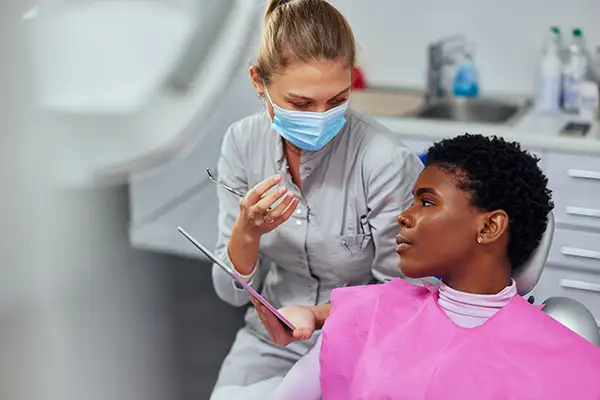
For patients with severe dental anxiety, particularly those whose anxiety involves a strong physical fear response or is connected to past trauma, intraoral cameras alone will not fully resolve the difficulty of dental visits. These patients deserve a comprehensive, individualized approach that may include specialized anxiety management protocols, behavioral strategies, sedation options, or referral to providers with specific training in treating anxious patients. The intraoral camera is one useful element in that broader picture, but it should be presented honestly as a tool that helps with the communication and transparency aspects of anxiety rather than a solution to the full clinical challenge.
At Capital Dental Center, we take dental anxiety seriously and work to make every visit as comfortable, transparent, and low-stress as possible. If anxiety has kept you from getting the care you need, please call us at 202-978-8778. We are here to help.
|